
Mediation & Collaborative Divorce
Richard Sperling
Mediation can help resolve divorce matters with more clarity, less conflict, and a stronger focus on practical, workable solutions for both parties.
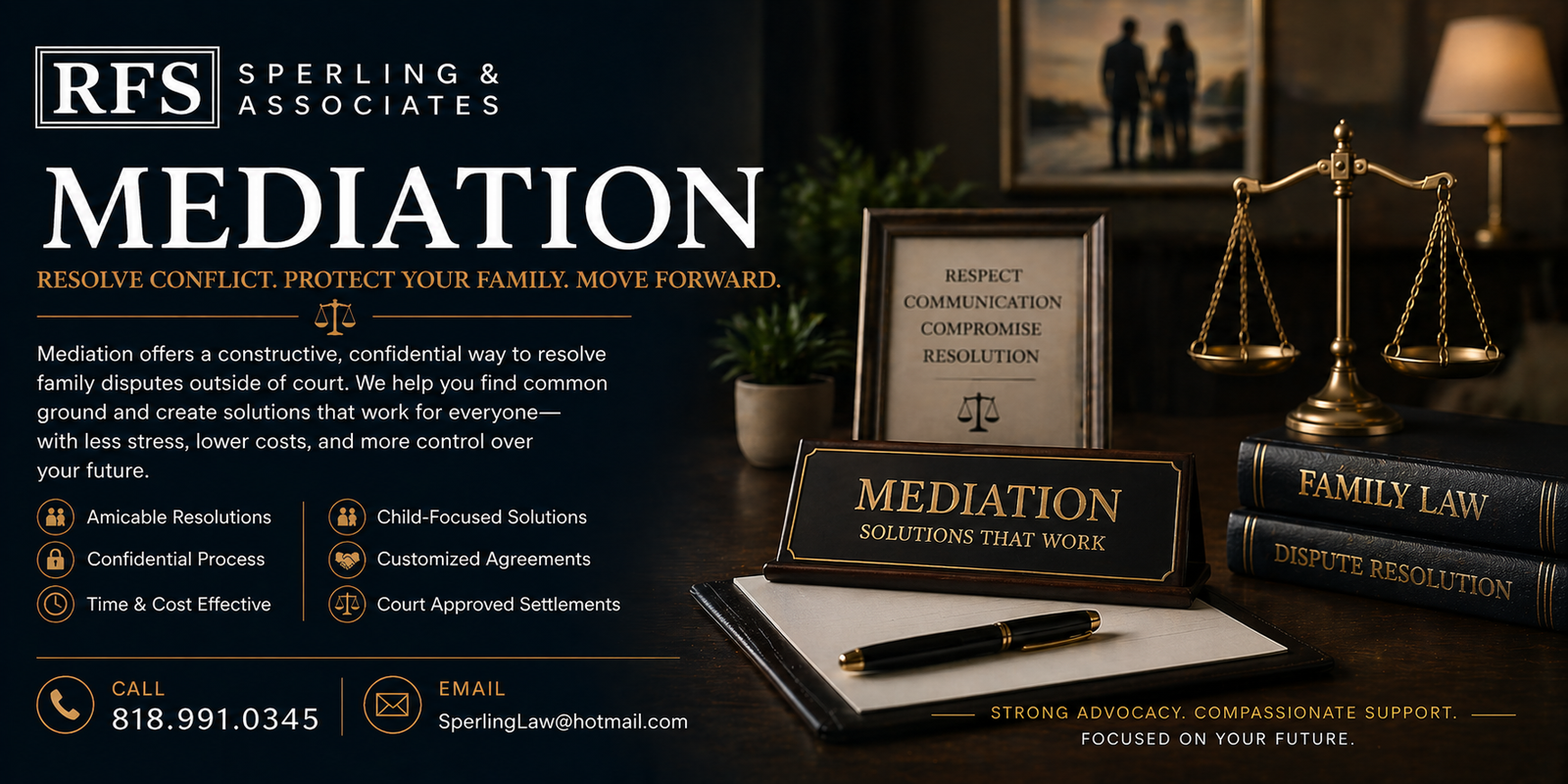
Experienced Divorce Mediator Specializing in Collaborative Divorce
Most divorces are a process of proposal and negotiation. Your attorney should first discuss your personal and financial circumstances with you so an informed settlement proposal can be prepared for the other party and/or their attorney to consider. In many cases, careful negotiation leads to a workable settlement without unnecessary conflict.
Negotiations often follow through counsel, and many cases are ultimately resolved by agreements reached between attorneys. For some divorcing parties, however, mediation or collaborative divorce may offer a different and more constructive path forward.
How Mediation Often Works
Some divorcing parties choose mediation with a neutral mediator. In these cases, the mediator meets with both parties in person or by Zoom and helps guide discussion so the parties can work through their issues and attempt to reach an agreement.
Meet with a Neutral Mediator
Both parties meet with a mediator whose role is to help guide discussion toward resolution.
Discuss Key Issues
The parties address finances, property, support, parenting issues, and other areas of disagreement.
Work Toward Agreement
Through structured communication, the parties can often reach practical and informed solutions.
Move Toward Settlement
If enough issues are resolved, the mediated process can lead to a written agreement and final settlement.
Attorney Participation in Mediation
Parties usually attend mediation sessions without their attorneys present, although in some cases attorneys do accompany their clients. The mediator’s role is not to act as either side’s advocate, but instead to help the parties communicate effectively and work toward resolution of the issues between them.
When mediating, some spouses feel that they have more control over the process, and in some situations mediation may be less expensive overall than fully adversarial litigation.
Richard Sperling’s Mediation Experience
Richard Sperling has been a divorce mediator for many years. He trained as a mediator at the Strauss Institute at Pepperdine Law School and has taught mediation at the college, graduate school, and law school levels.
That training and experience can be valuable in helping parties navigate difficult discussions with structure, professionalism, and a focus on practical resolution.
Collaborative Law as Another Option
Collaborative law is another option for divorcing parties. In the most common collaborative process, the parties discuss their case and work toward agreement through a series of in-person meetings with their attorneys present.
Why Collaborative Divorce Appeals to Some Parties
This process can offer reassurance that everyone involved is focused on settlement rather than litigation. Because the attorneys customarily agree in writing to withdraw if a court hearing becomes necessary, the parties are assured that counsel has no incentive for the matter to proceed to court.
Richard is a trained collaborative law professional and is experienced using the collaborative law approach to help resolve divorce cases.
Discuss the Right Process for Your Situation
Every case is different. For some parties, traditional attorney-led negotiation may be the right approach. For others, mediation or collaborative law may provide a more suitable path.
If mediation or collaborative law is of interest to you, contact us to discuss these optional processes and determine whether they may be a good fit for your circumstances.
Speak with Sperling & Associates
Experienced guidance for mediation, collaborative divorce, and negotiated family law resolutions.